Project Specs
- Location: Oregon
- Project Type: Educational
- System Type: Solar Awnings
- Module Type: Vision
- Installer: Elemental Energy
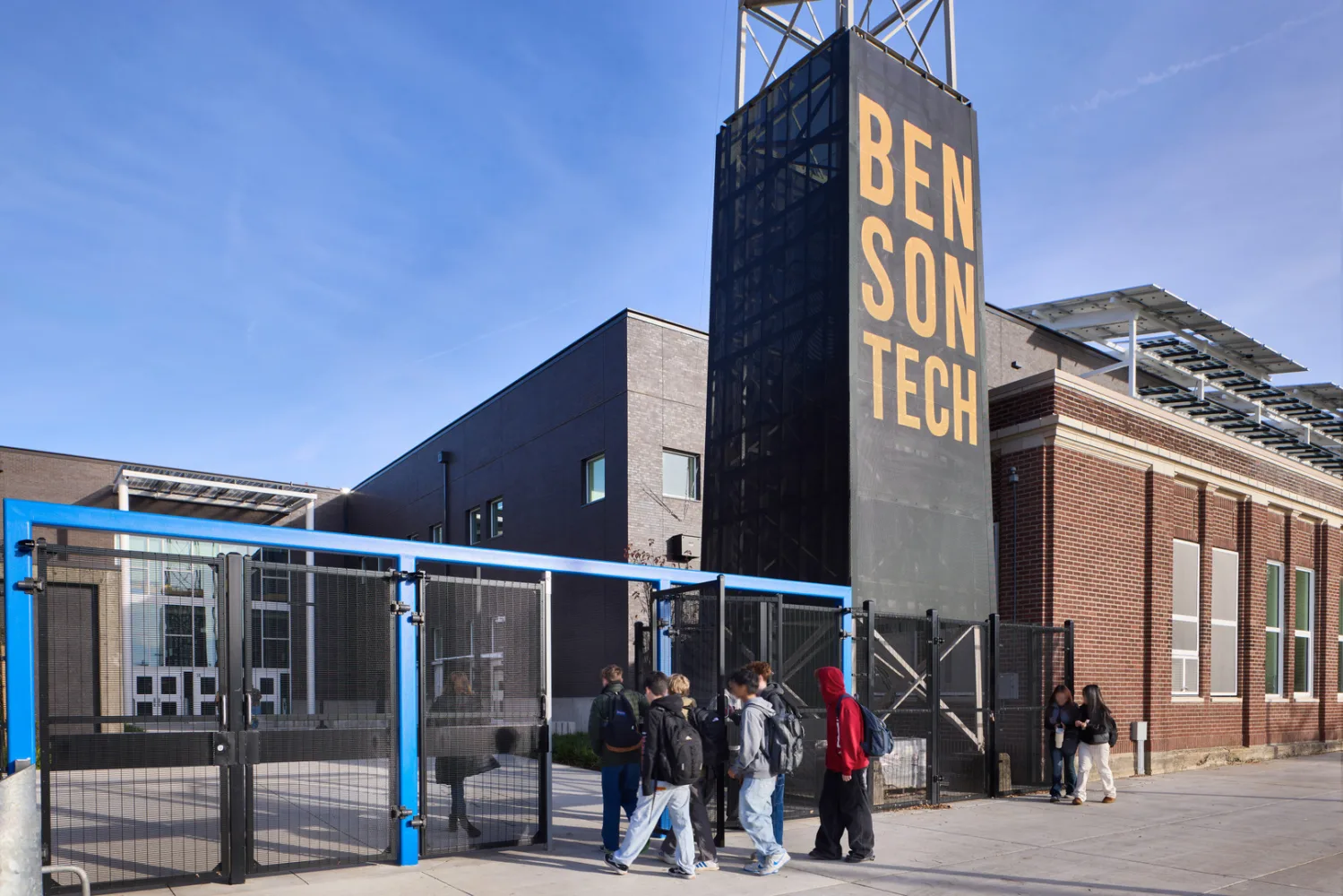
Since 1917, Benson Polytechnic High School has been preparing students for an ever-modernizing world. As technology advances, schools continue to update how they teach. However, many campuses still rely on buildings and infrastructure designed decades ago. Benson Polytechnic High School chose a different path.
To honor the origins of this historic school, the Benson administration prioritized integrating clean energy into the school’s newest design. Benson’s modernization became more than a renovation—it became a model for sustainable campus design. By combining innovative architecture with renewable energy, the project earned LEED Platinum certification, recognizing its exceptional performance in energy efficiency, environmental responsibility, and long-term building performance.
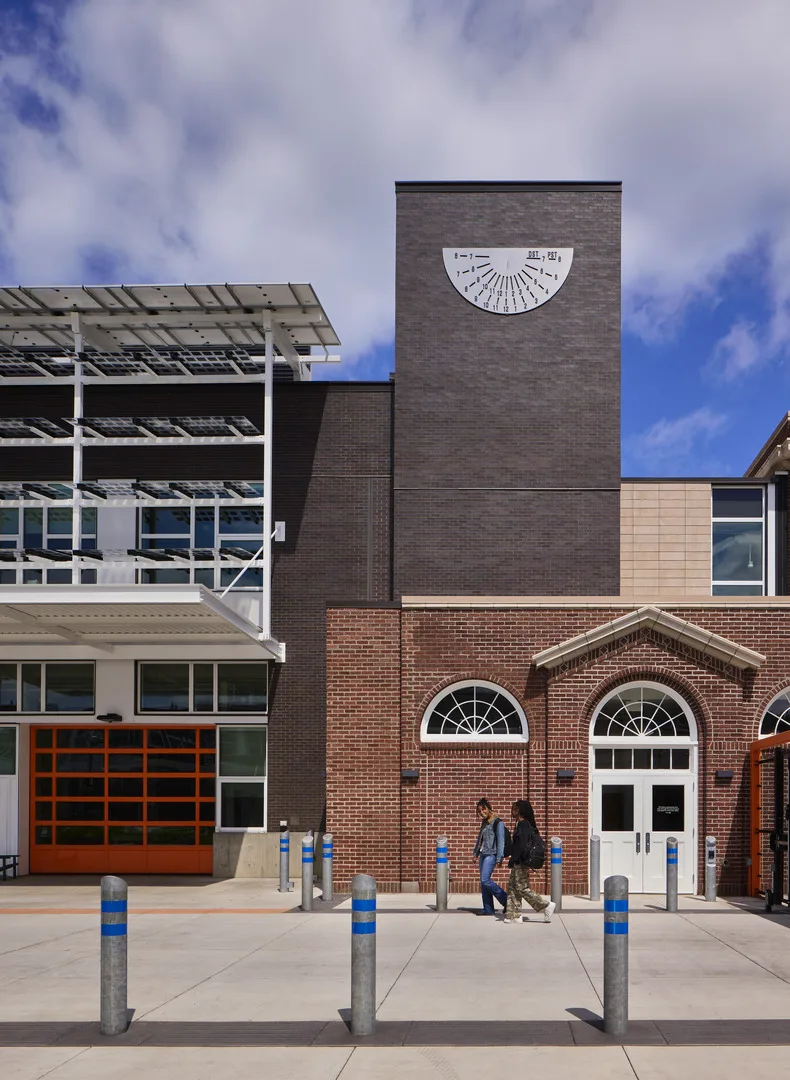
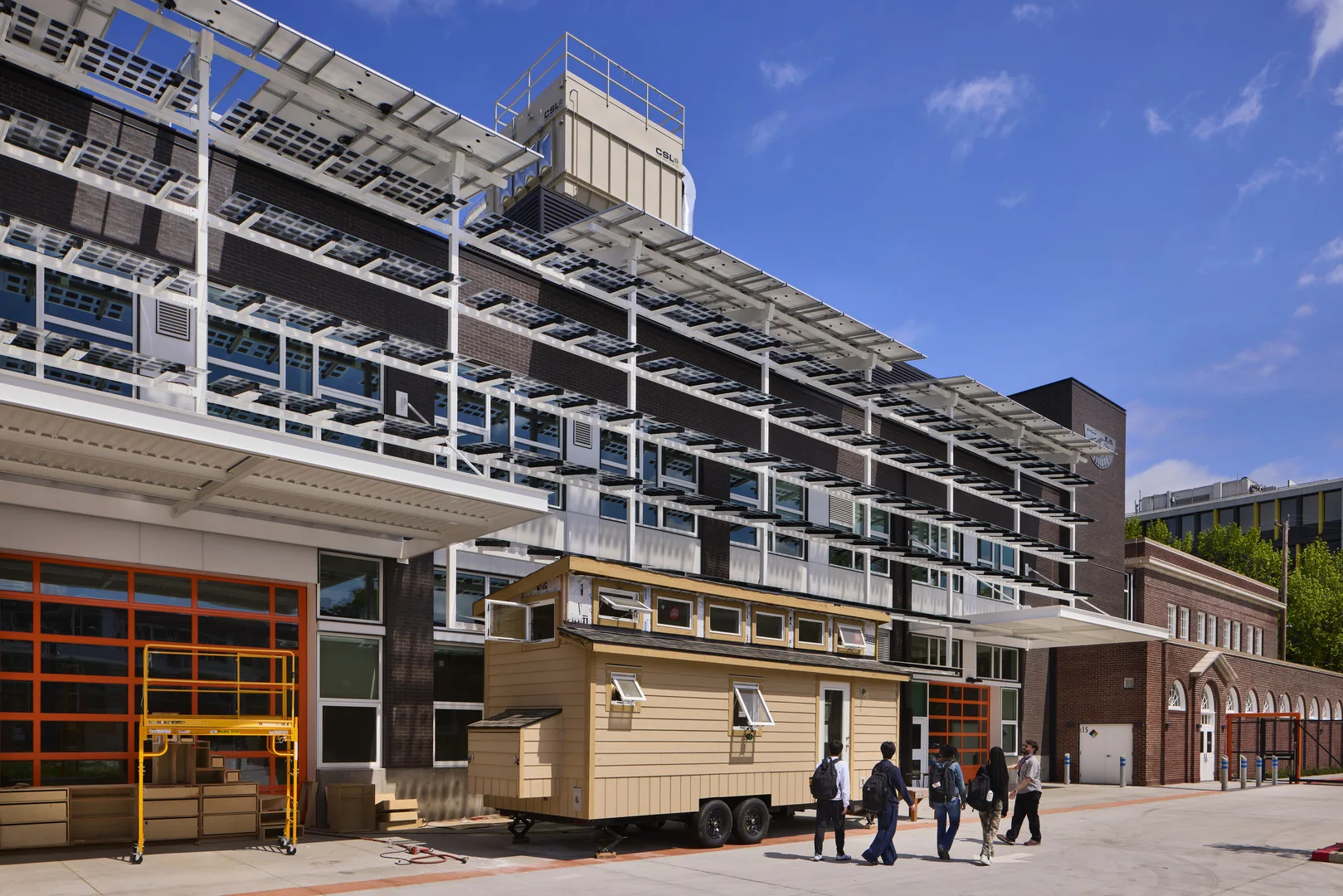
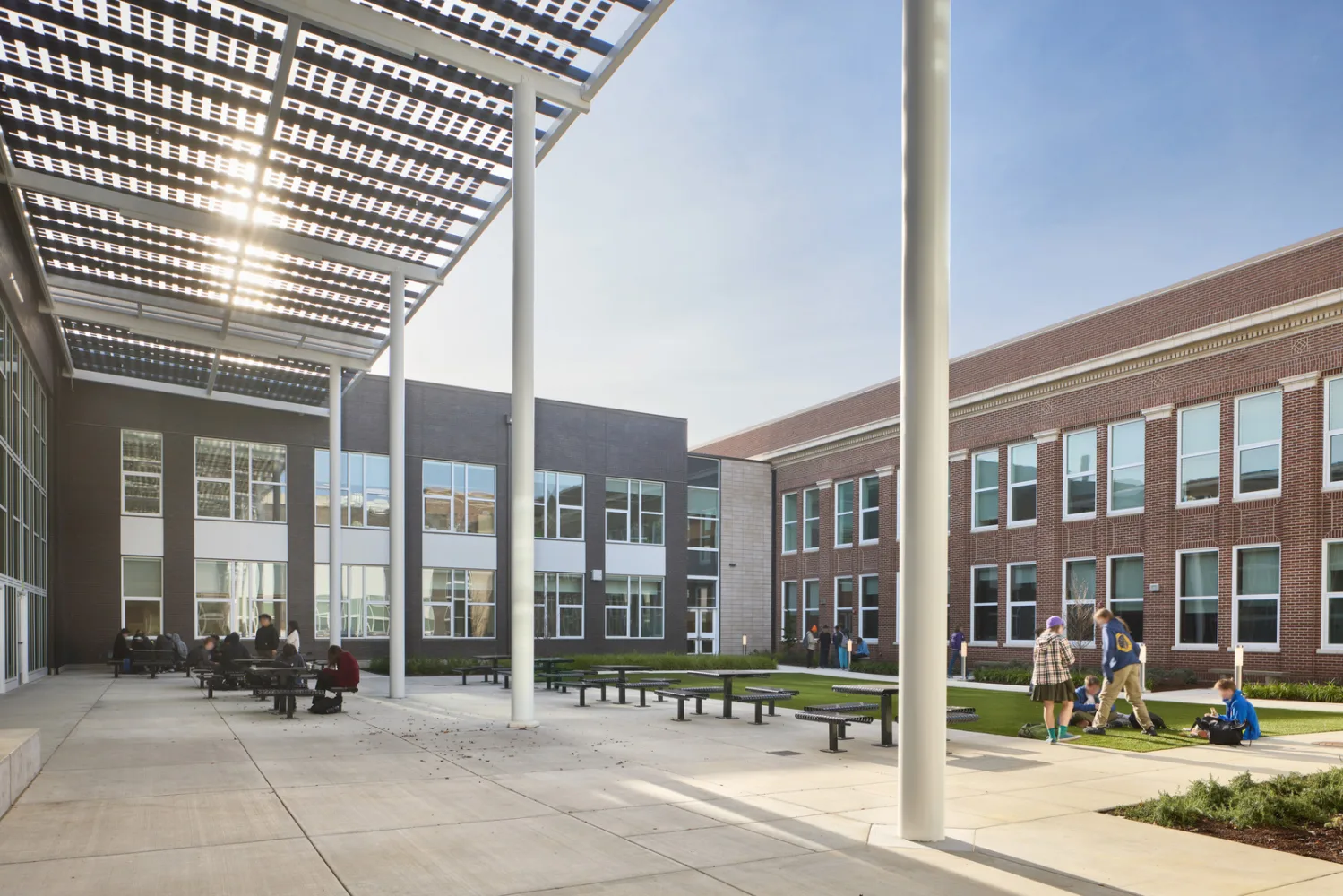
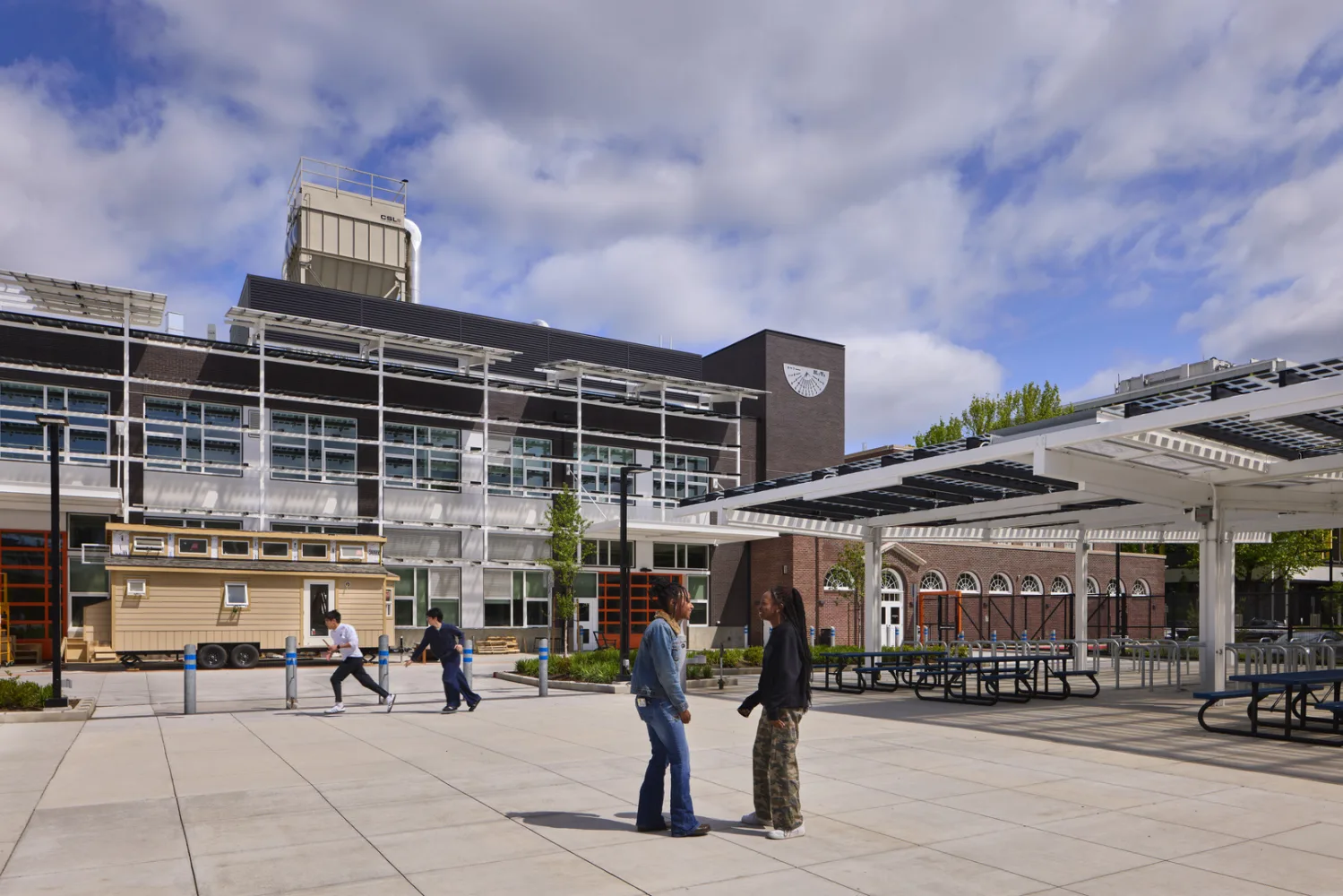
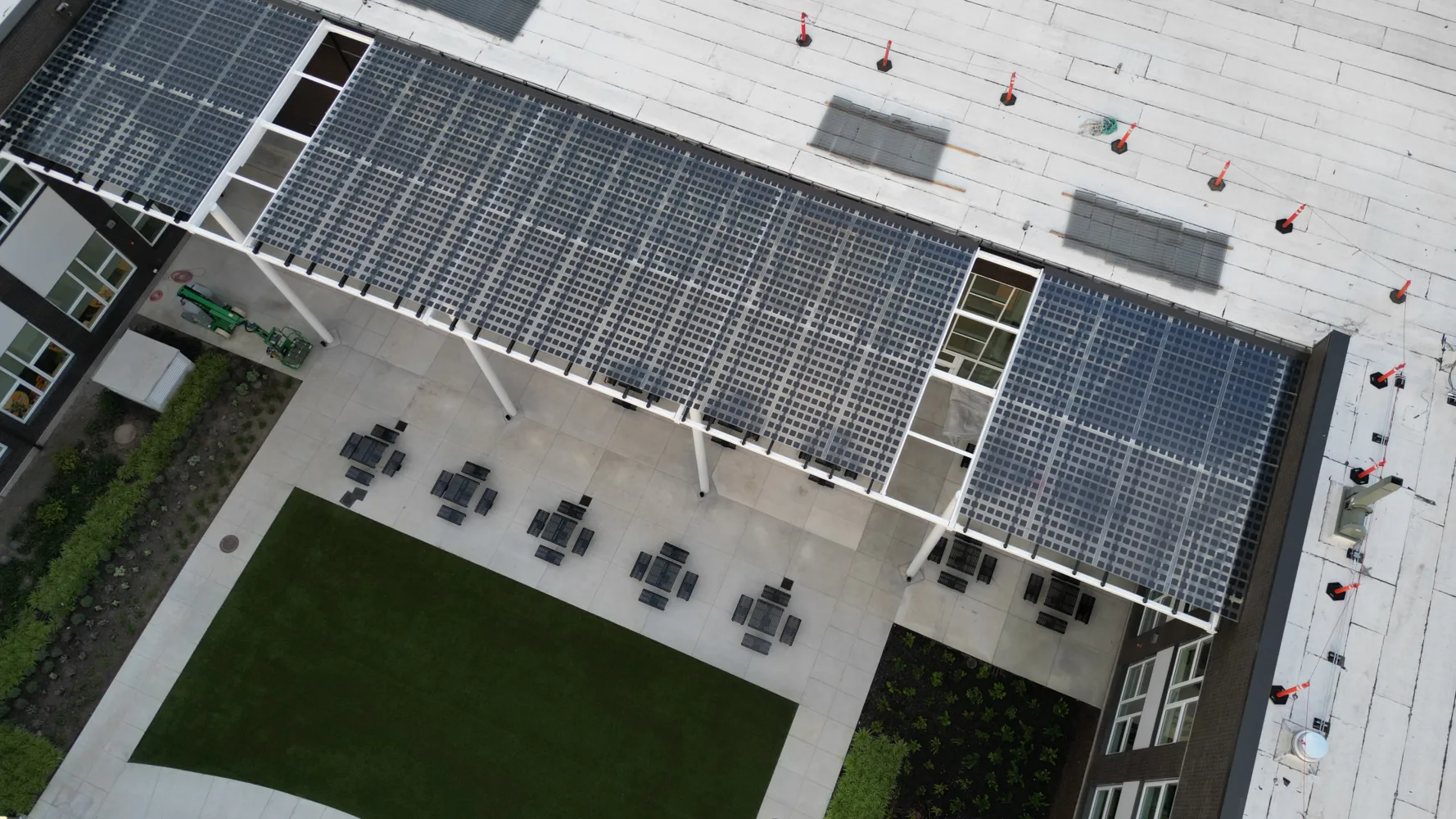
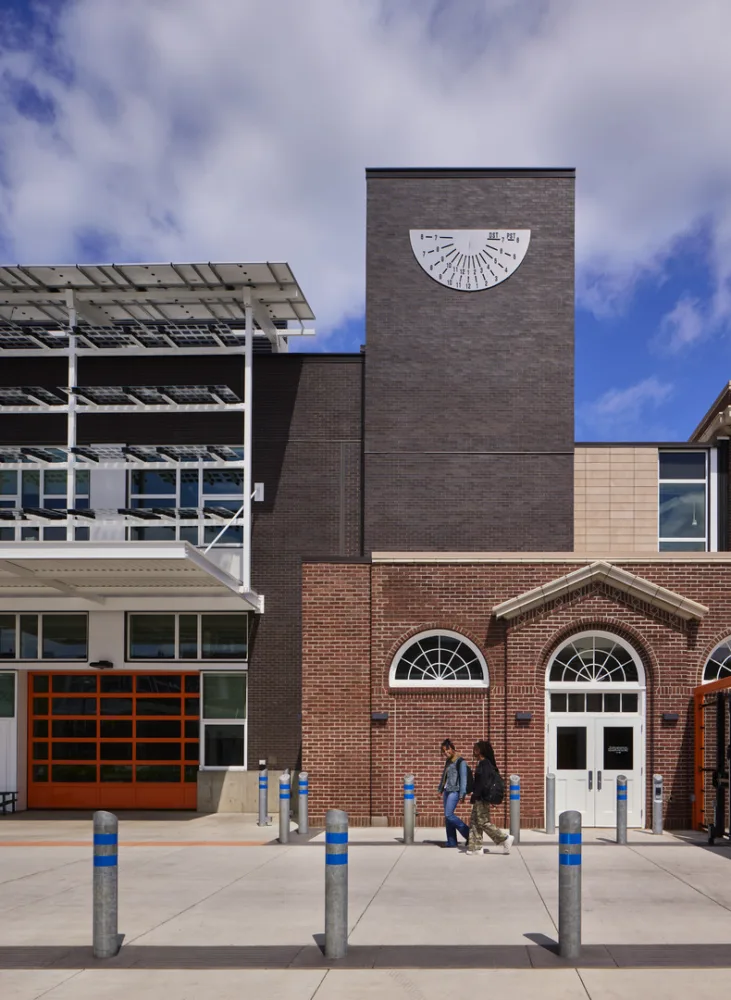
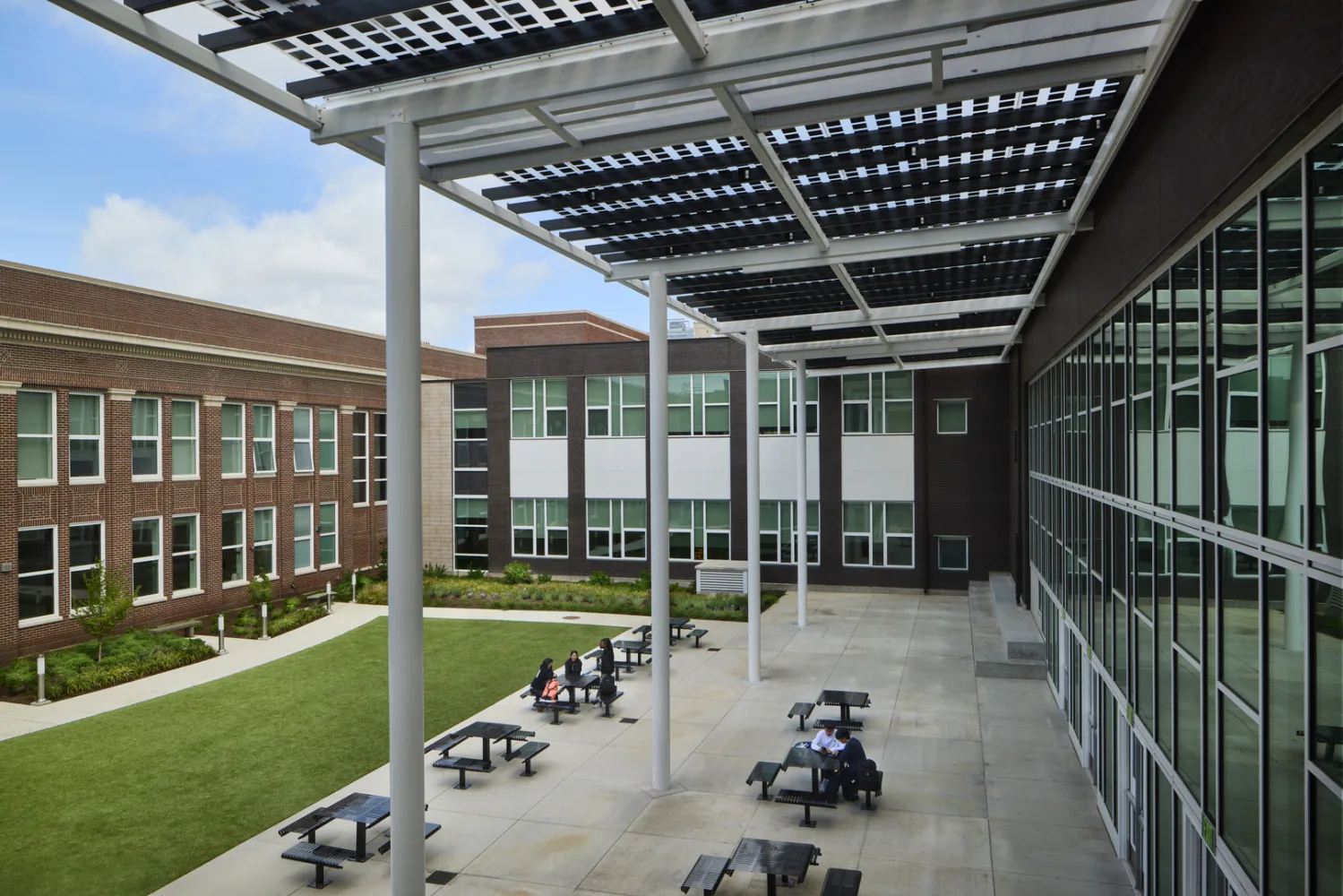
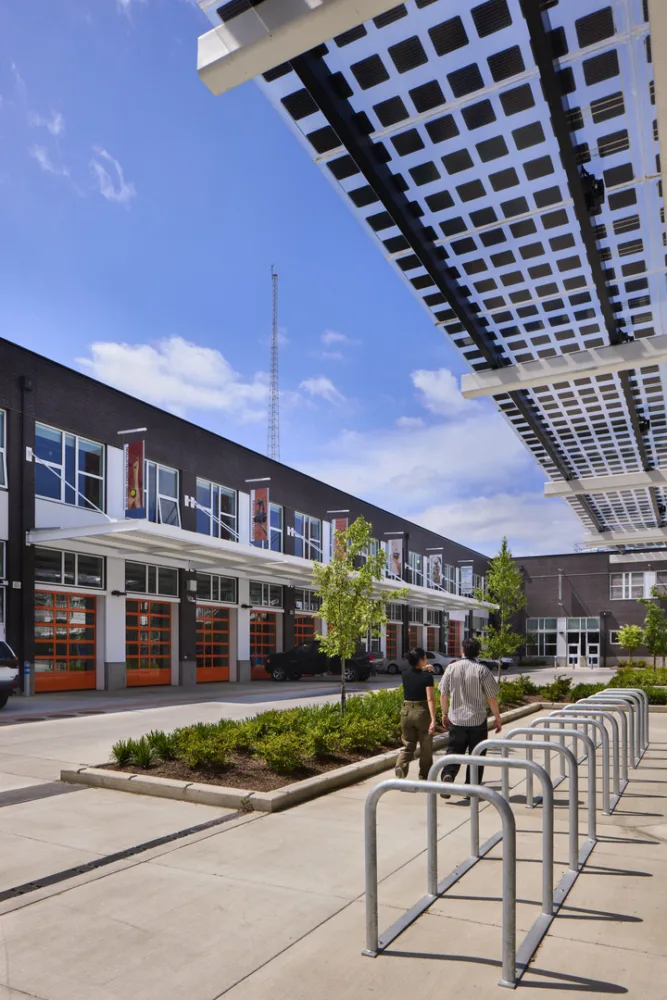
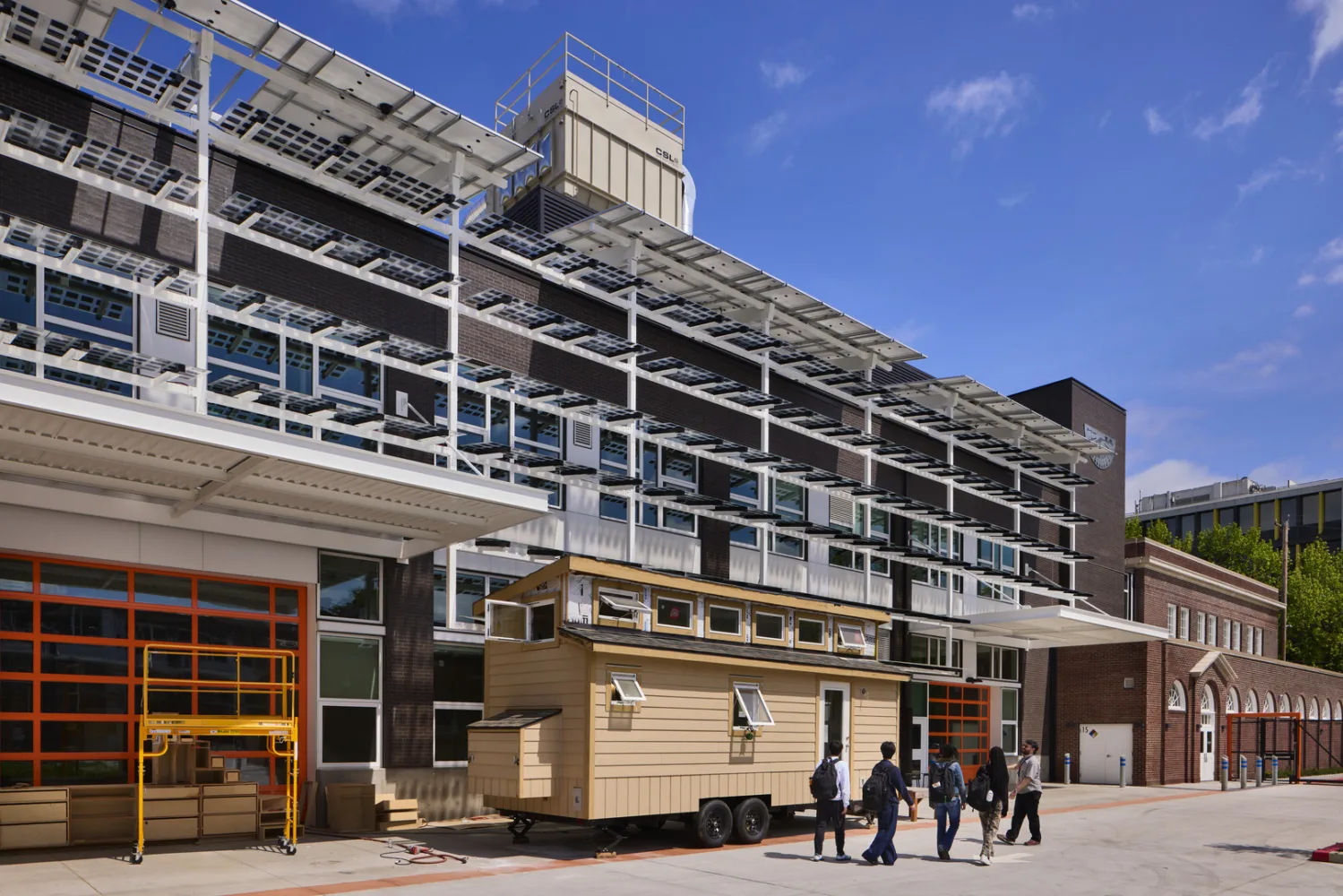
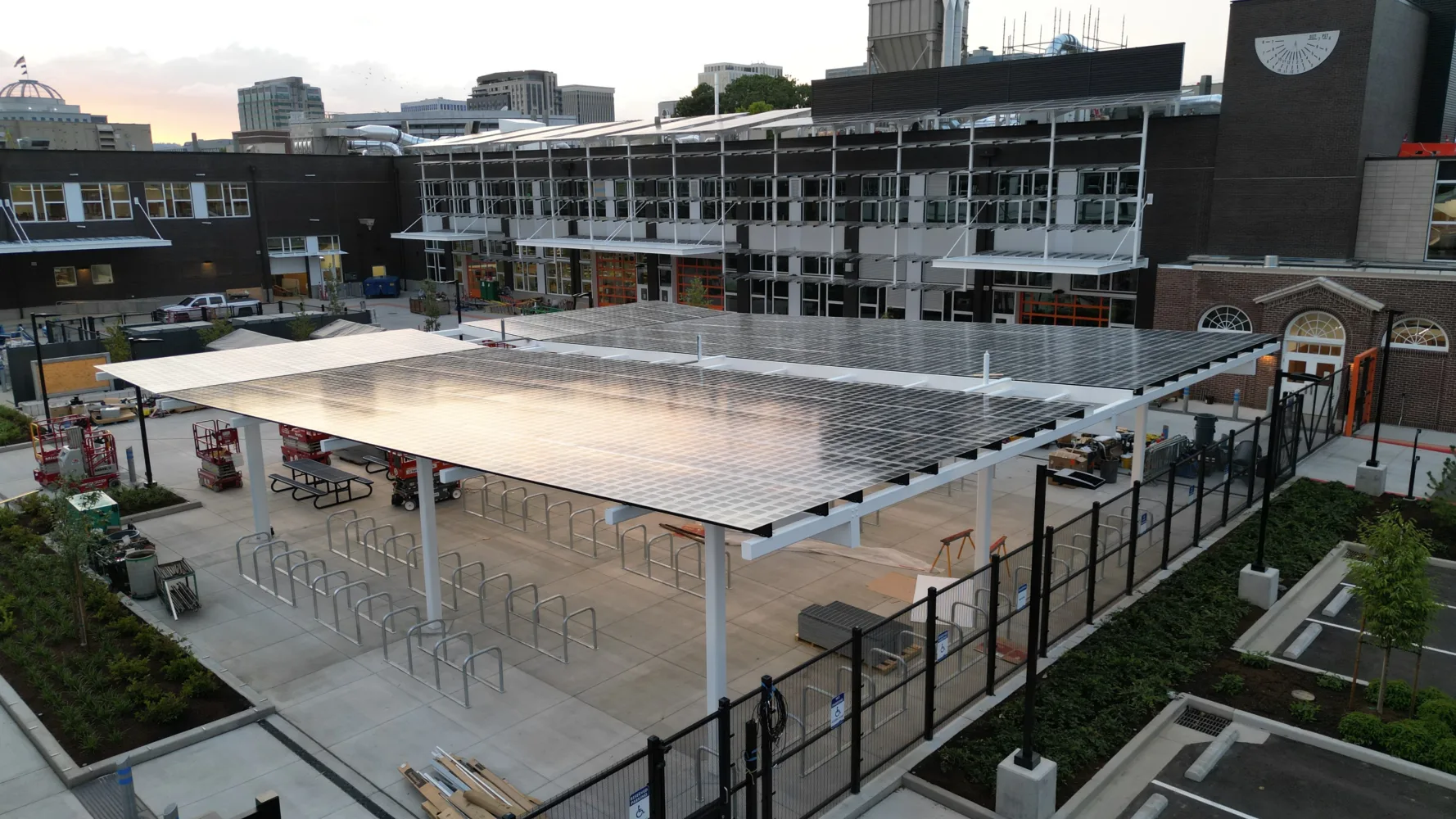
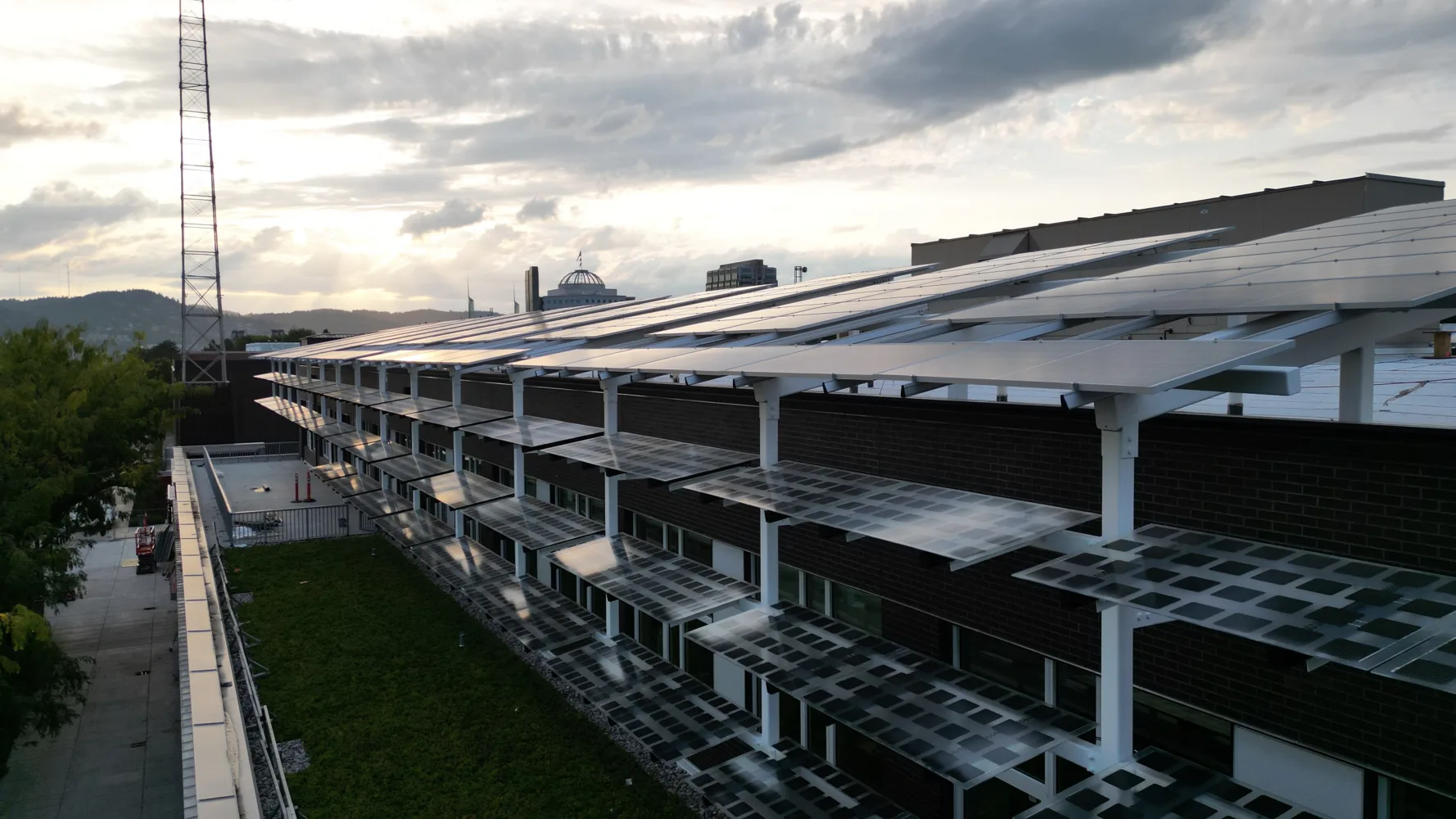
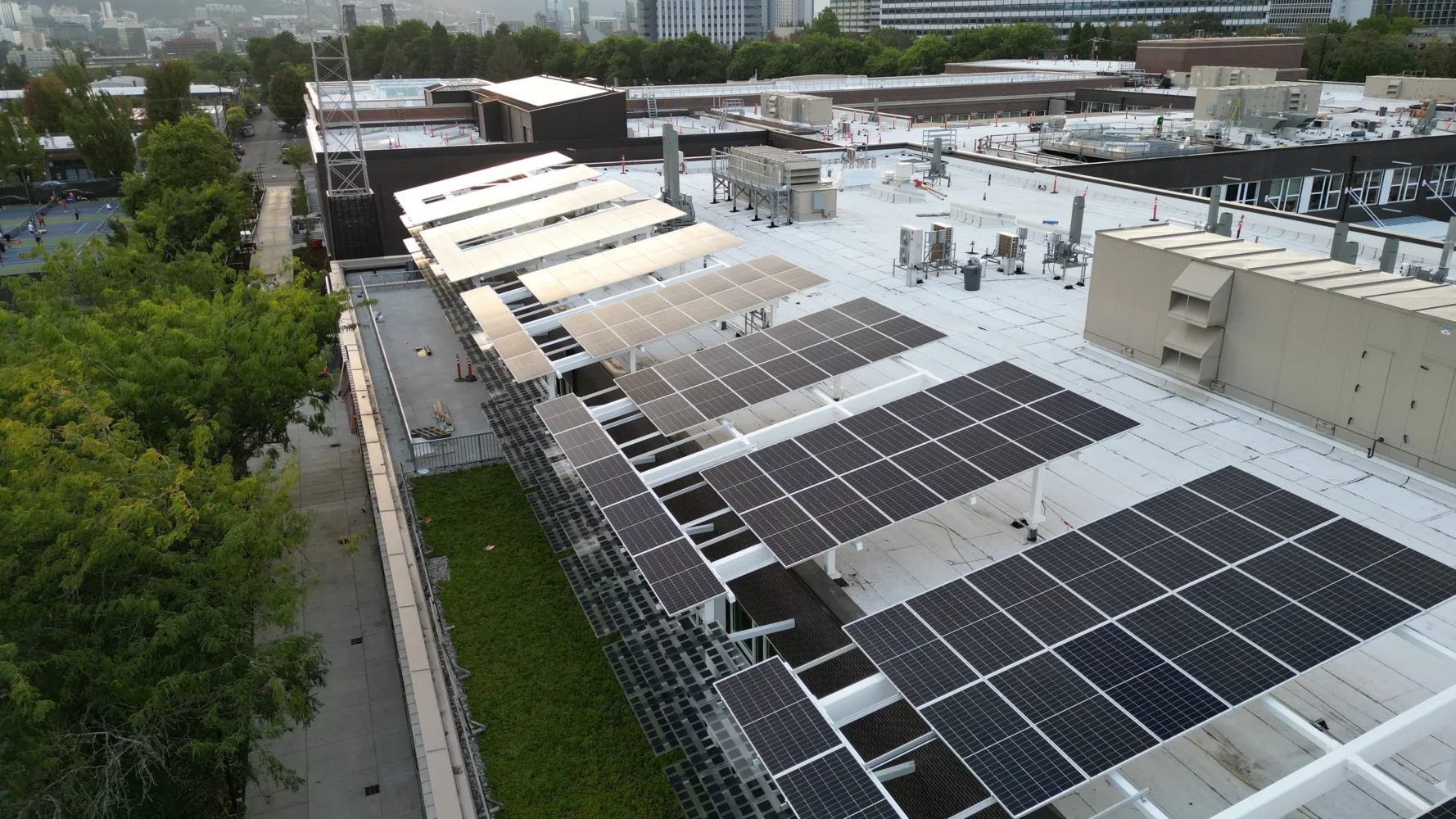
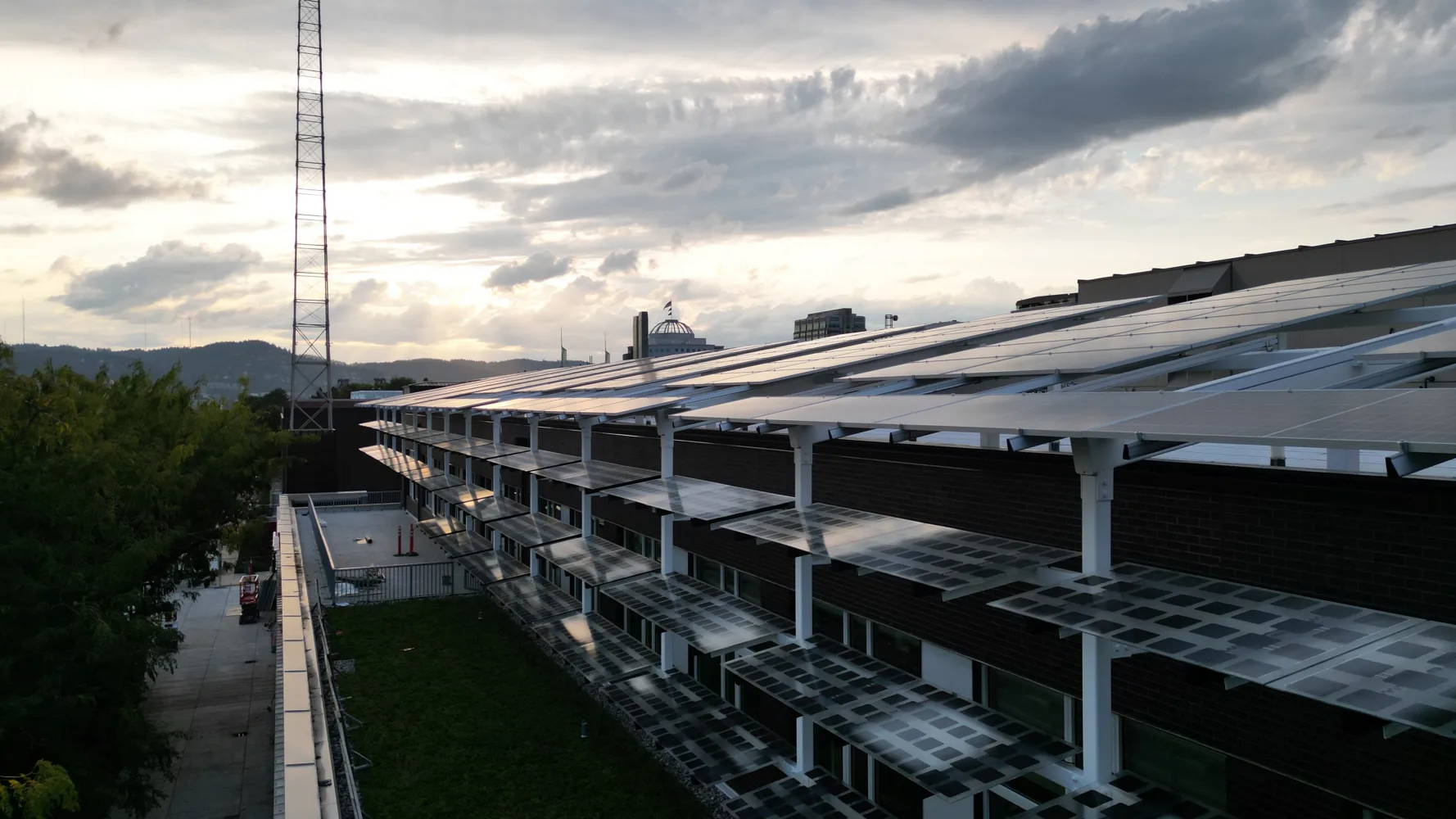
By integrating solar into an overhead structure, Benson took solar off the roof and learning out of the classroom. Students can enjoy the outdoor courtyard under a real-life demonstration of clean technology without fear of overexposure to the elements. Instead of hiding the solar system on rooftops, the design team made it part of the campus. They integrated solar into courtyard canopies, building entrances, bike shelters, and sun-shading structures. As a result, students experience renewable energy every day as they move through campus. This vision required much more than a standard rooftop solar installation. The project included 1,022 solar modules, but only 84 were installed on traditional roofs. The remaining modules became part of custom architectural structures across the campus. Each location required close coordination between the architects, engineers, fabricators, and installation team.
HMC Architecture designed the school’s new campus with respect to these clean energy goals, Principal in Charge of HMC Architecture, Lydia Dominy Burns says: “The achievement of LEED Platinum is testament to the collaborative effort by all involved in pushing the envelope on what was possible, given the project constraints. Key leadership from Portland Public Schools and the design/construction team implemented creative solutions and didn’t see LEED Silver as the ceiling. Instead, it served as a foundation to propel the collaborative design thinking toward efforts that would limit first-cost impacts but would provide long-term benefits to students, staff and district operations.”. That same spirit of collaboration continued throughout construction. Every team worked together to turn the design into a functioning architectural solar system.
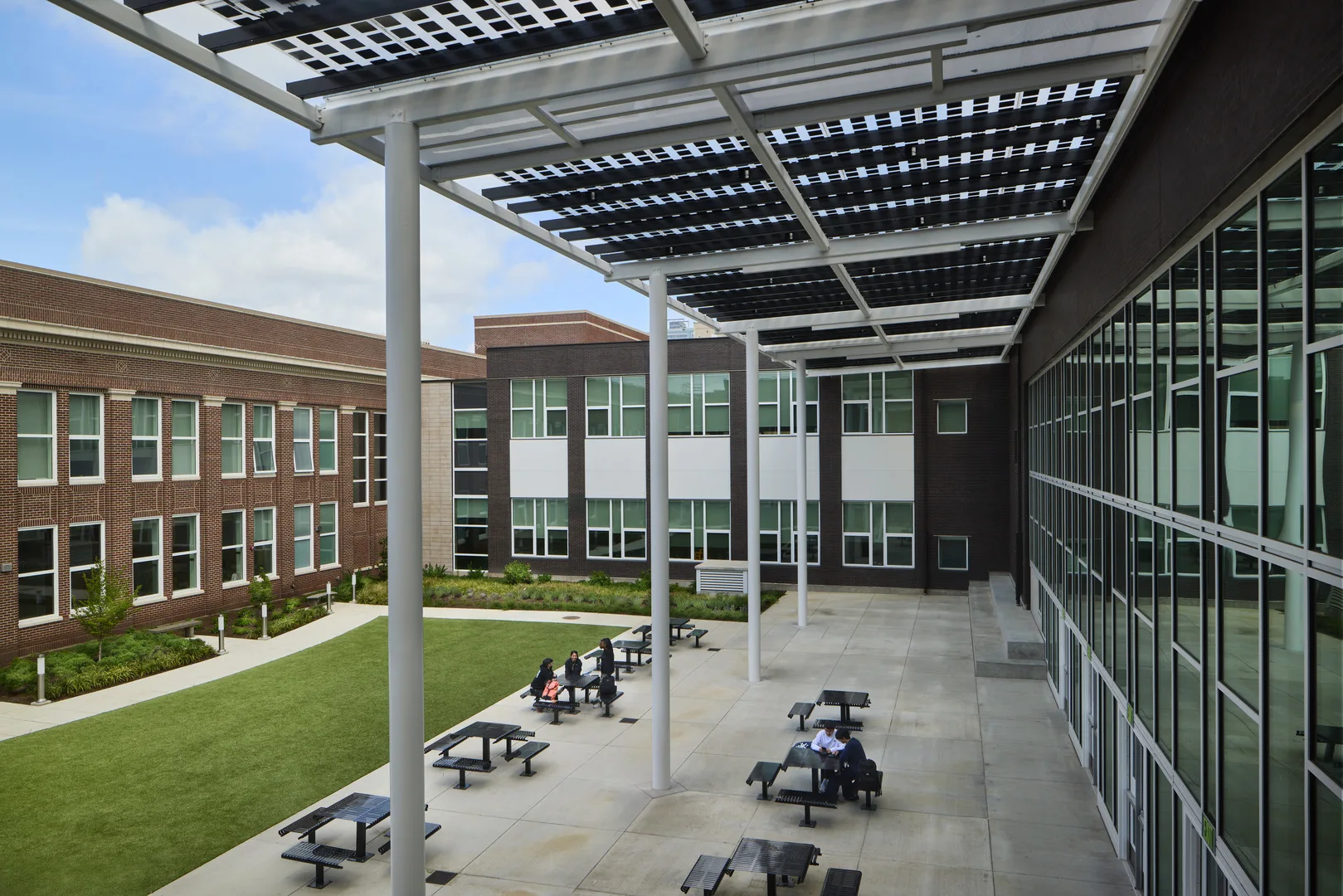
Elemental Energy brought the design to life through careful planning and installation. The Washington and Oregon installer has completed more than 4,000 solar projects over the past 15 years. For Benson Polytechnic High School, the team spent nearly 4,000 field hours installing custom steel connections, electrical infrastructure, and the architecturally integrated solar system. Their craftsmanship helped deliver the clean, modern appearance envisioned by the design team. Lumos supplied 585 Vision Modules for the project. The glass-on-glass modules provide shade and weather protection while allowing natural daylight to filter through. This creates bright, comfortable outdoor spaces without blocking the light below. Their frameless design also gave the architects greater flexibility to integrate solar into the campus while maintaining a clean architectural appearance.
More than a century after opening its doors, Benson Polytechnic High School continues to prepare students for the future – not only through its curriculum but through the campus itself. The completed project demonstrates how renewable energy can become part of the architecture, creating functional spaces that support learning while contributing to long-term sustainability goals.
Benson stands as an example of what thoughtful collaboration can achieve. By integrating solar into the campus rather than treating it as a separate system, the project shows how architecture and renewable energy can work together to create spaces that are both beautiful and purposeful. It is an approach that will continue to shape the next generation of sustainable campus design.