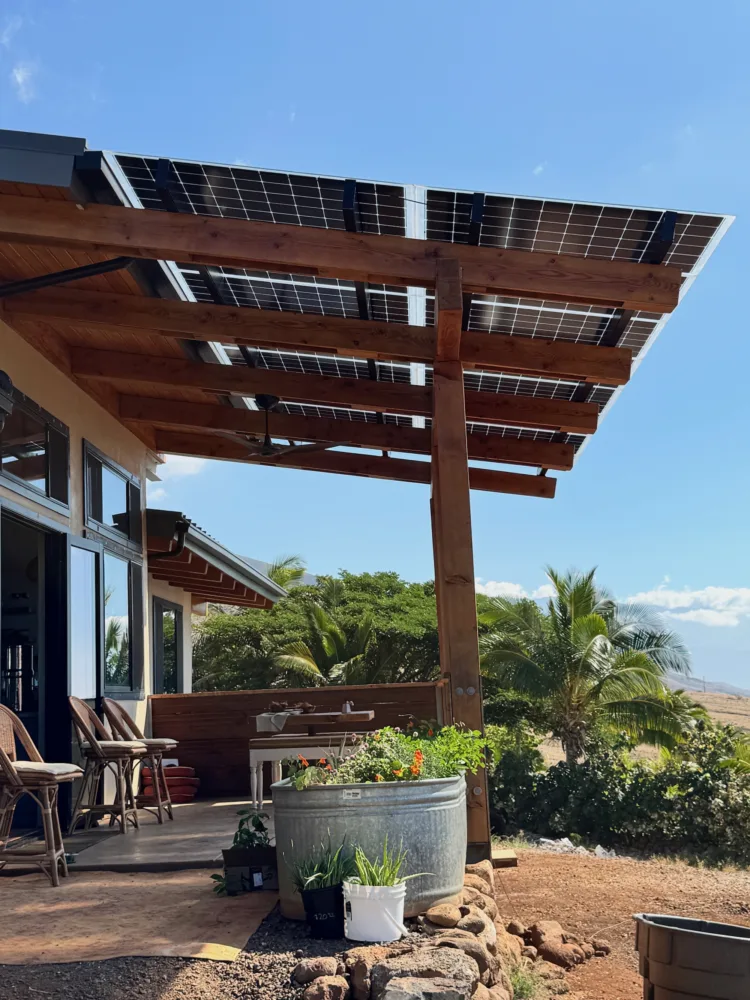
Project Specs
- Location: Hawi, Hawaii
- Project Type: Residential
- System Type: Solar Awnings
- Module Type: Vision
- Installer: Hawaii Off Grid
For this customer, net-zero design was a non-negotiable. Having created the first completely off grid restaurant in Hawai’i they knew how beautiful it could be and the impact it could have on the community. And with the help of some of the most experienced off grid designers, at Hawaii Off Grid, the possibilities felt endless. With a clear goal that both the designer and client aligned with, they knew that they wanted the sustainable features to be a focal point of the design. They wanted to invite conversation about clean energy, rather than shy away from it. With years of working with Lumos, HIOG designers knew our overhead solar solutions would make this project come to life.
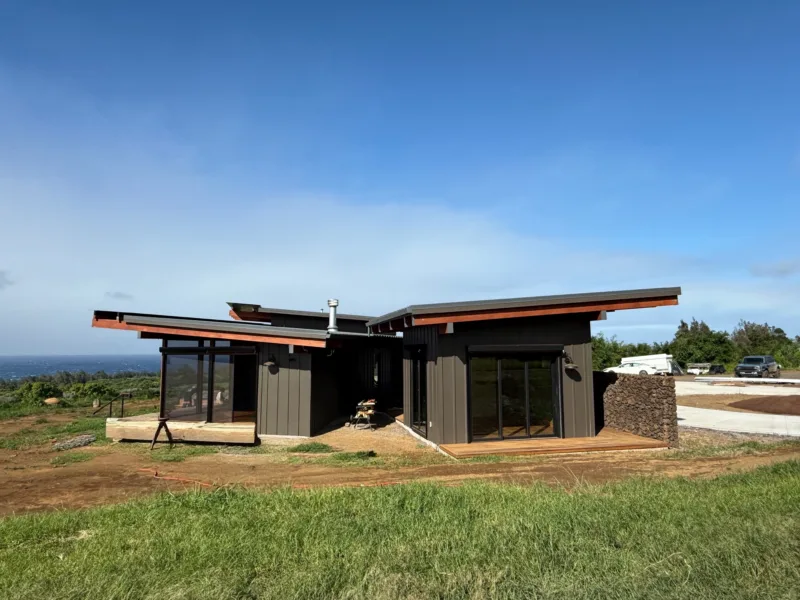
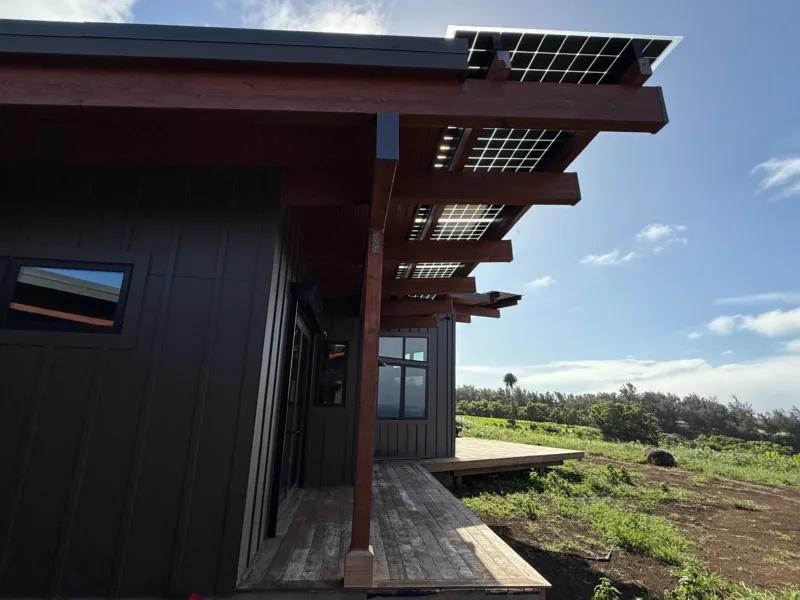
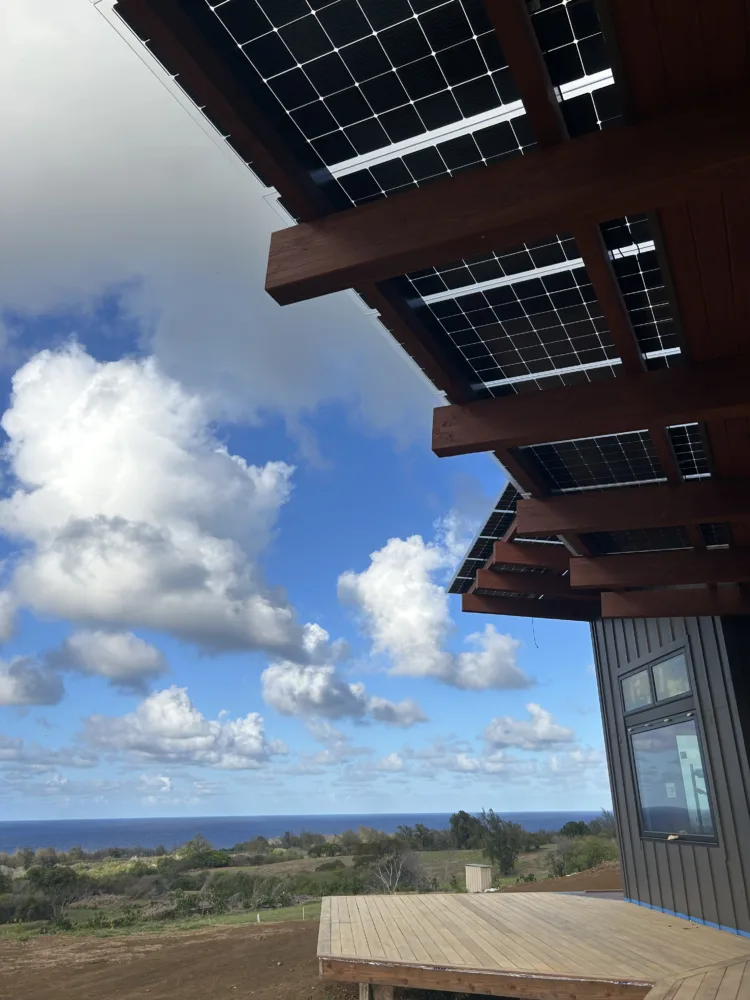
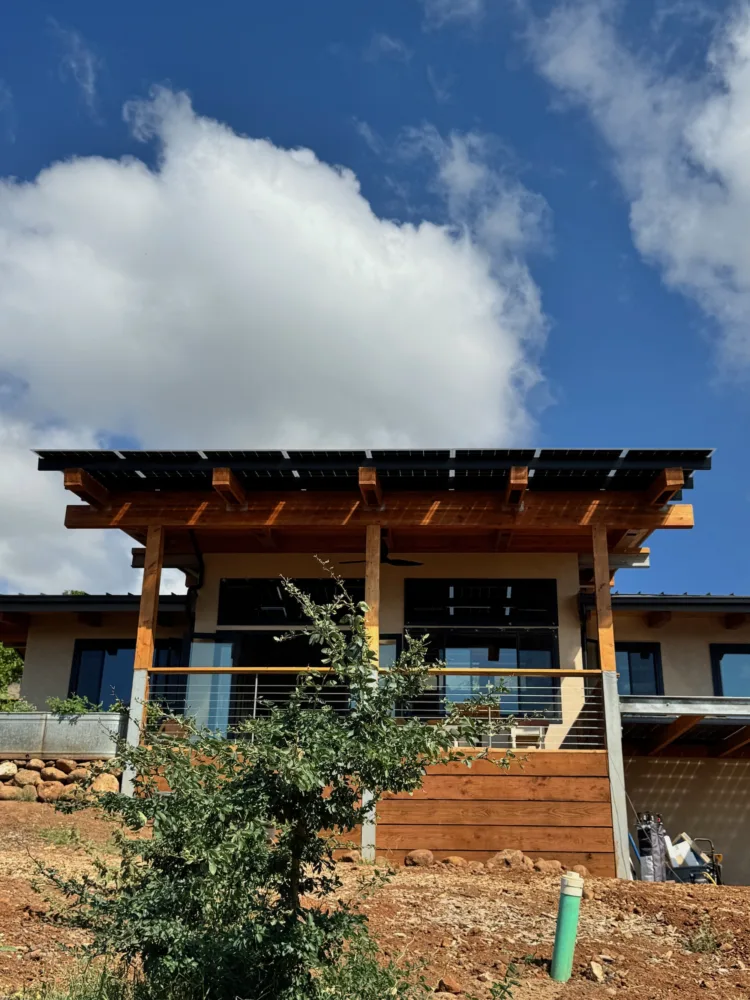
With net-zero performance as a priority, Hawai‘i Off Grid incorporated an overhead Lumos solar awning into the design. The company’s architects work alongside its internal solar installation team, allowing the two groups to collaborate directly throughout the project.That collaboration was particularly valuable on a project where the solar system was meant to be seen. The team could consider the architectural applications of the Lumos system and unique installation requirements from the beginning.
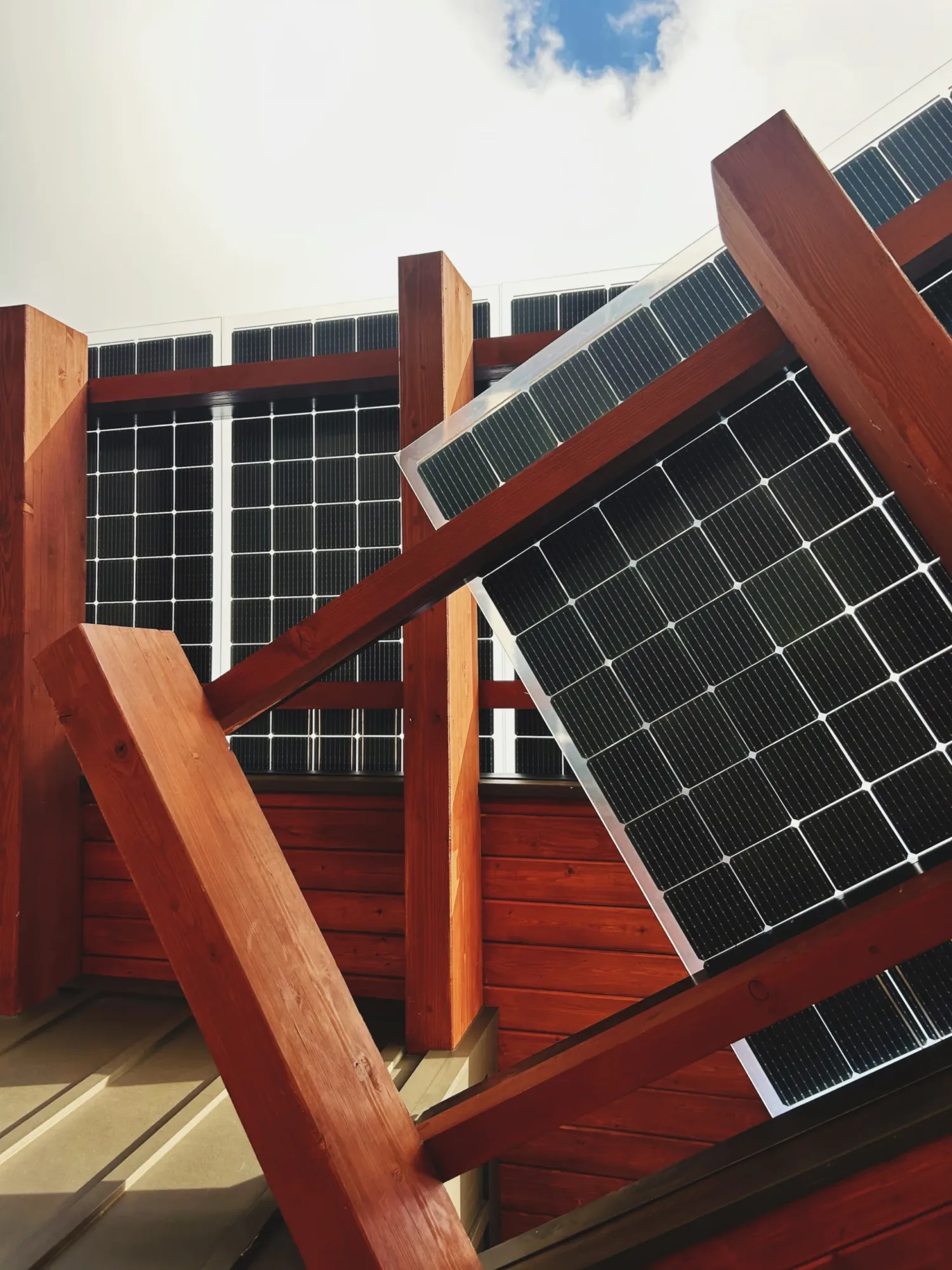
The project included approximately 30 Lumos Vision modules, supplemented by additional PV modules to meet the project’s energy requirements. The remote location also brought its own challenges. Materials and equipment had to be carefully planned as well, since supplies could not simply be picked up locally.
Lumos’ solar system also serves a practical purpose beyond achieving net-zero performance. Hawai‘i’s intense weather patterns and frequent power outages make energy independence particularly valuable. An off-grid system gives the residents greater control over its power supply and reduces its reliance on the local grid.
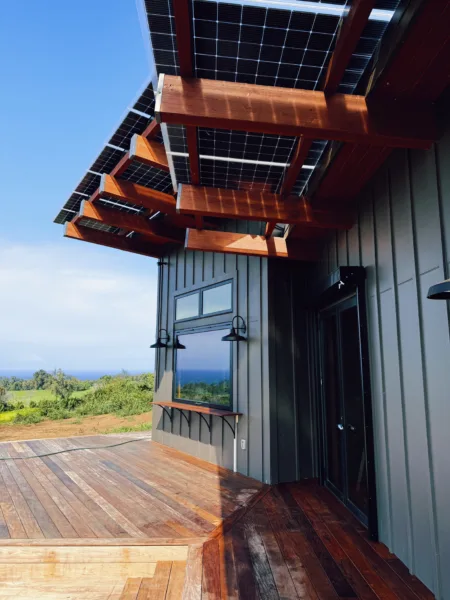
The finished project reflects the original vision: a net-zero home where sustainable systems are not tucked away out of sight.
The Lumos solar array, water infrastructure, and other sustainable elements are visible throughout the property and become part of the experience of the home. Rather than simply supporting the project behind the scenes, these systems demonstrate how sustainability can become part of the architecture itself—and create a home that makes its environmental goals visible.